Robert Cartolano on advocating for interoperable standards in academic libraries
A few weeks ago, we met with Robert Cartolano from the Columbia University Libraries and the Readium Foundation, to discuss his long-time advocacy for open-source and open standards in libraries.
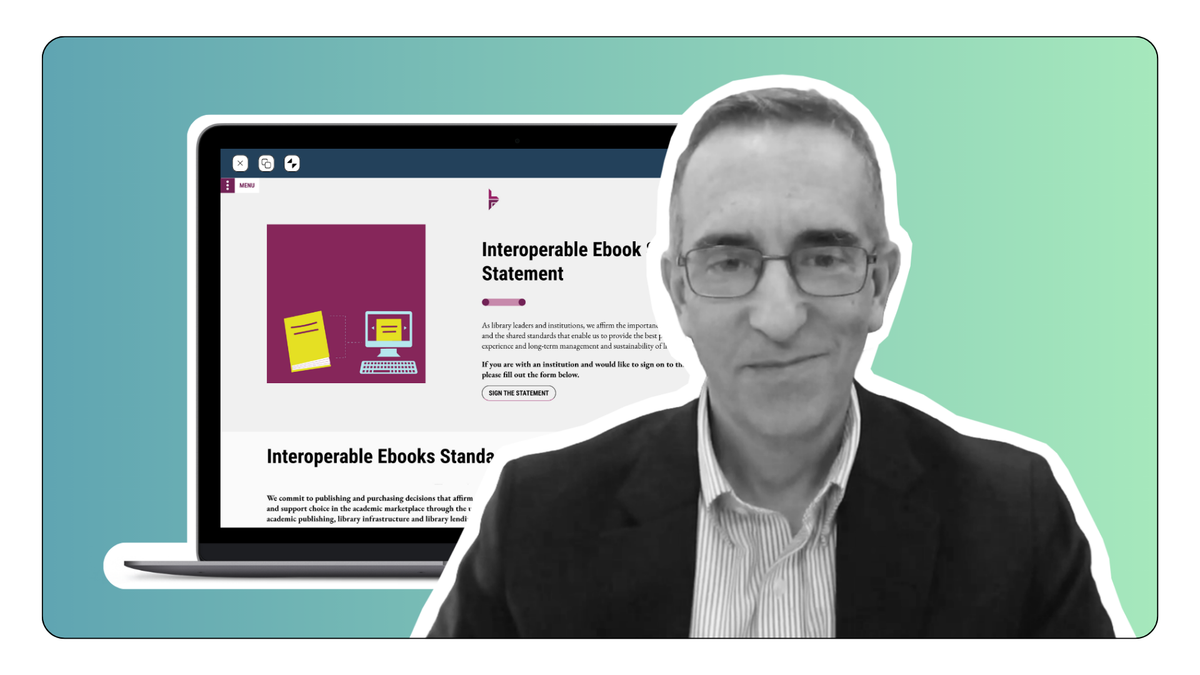
From Lyrasis' Palace Project to Readium and the Interoperable Ebook Standards Statement, we tackled a variety of initiatives and organizations that are actively working towards build a coherent, accessible and unified reading experience from public to academic libraries.
Transforming the academic experience through interoperable standards at Columbia
As the Associate Vice President Technology and Preservation at the Columbia University Libraries, Robert Cartolano's mission is to continually think of ways to improve the access to academic ebooks and their use. Years ago, he was part of the team that launched a project called "Transforming the academic ebook reading experience".
The project aimed at creating a seamless, three-step experience for users: find a book, get the book and read the book. It took inspiration from existing initiatives from public libraries, especially SimplyE by the New York Public Library and the Palace Project by Lyrasis, two projects that serve different missions but are both based on open-source technologies.
The choice of open-source, interoperable standards and technologies to power Columbia's efforts relied on four main goals:
- Providing a consistent digital experience for all users, instead of fragmenting it between several proprietary apps.
- Encouraging discovery and bibliodiversity by connecting the platform to the local library's catalog.
- Providing accessible technologies by limiting the number of steps needed to read an ebook and choosing an inclusive digital reader.
- Integrating the project into Columbia's ecosystem through branding, reporting and administration involvement.
The importance of interoperable standards and technologies in academic libraries
When asked about the importance of open-source technologies at Columbia, Robert emphasizes the importance of supporting research. One of the university's mission is to enrich its research library in order to nurture its faculty, students and academics. Collecting new materials and making them accessible require interoperability and protocols to support all metadata and collections over time.
The Readium Foundation uses open standards such as OPDS and EPUB, which help Columbia support these metadata. Through those standards, Readium builds open-source technologies that are interoperable between servers, services and applications. This way of working with data allows libraries to create a seamless experience for readers, but it is also beneficial for bibliodiversity.
"This concept of bibliodiversity is really at the underpinning of open interoperable standards for libraries. We at Columbia collect internationally. So we want to support an open interoperable set of standards to support this international publishing landscape."
This mirrors the mission of the Readium Foundation itself, which actively works to spread the adoption of standards. Readium LCP, for instance, is a standard for content protection that facilitates readership and helps publishers as well as libraries foster a vibrant ebook marketplace. This example illustrates the importance of spreading interoperable ebook standards.
The Interoperable Ebook Standards Statement
Robert is not alone in his belief that open standards are the key to fostering a healthy global academic library system. With the help of Library Futures, a community of experts, him and William Maltarich from the NYU Libraries developed the Interoperable Ebook Standard Statement. This text states the four key elements that library leaders are asking for in the ebook environment:
- Ease of discovery: supporting consistent open metadata that can be shared across systems and across libraries to facilitate discovery, access, and use.
- Ease of use: facilitating interoperable systematic integration of ebooks into platforms to give users a better experience.
- Easier acquisition: growing the overall library marketplace to provide more sustainability as well as to increase author and researcher impact.
- Accessibility: making sure that no matter what capabilities they have, any user can find that the reader provides accessible ways to read an ebook.
In late 2024, at the Coalition for Networked Information, Robert took the floor to call for library leaders to endorse interoperable ebook standards. Since then, a growing number have signed the statement, illustrating how important these solutions are for the library ecosystem around the world.
Sign the Interoperable Ebook Standard Statement today!
A glimpse into the future of Readium initiatives and Lyrasis' Palace Project
With a new year come new opportunities. As 2026 is around the corner, Robert shared with us two areas that he will be focusing on in the near future.
On the one hand, his first goal for 2026 is to work with other academic library partners to foster adoption of Readium technologies and of the Palace Project. A group of library leaders around the United States is currently working to spread the word and encourage others to adopt open standards. Libraries all over the world are showing a growing interest in the Palace Project as well as the Readium Foundation - notably Readium LCP, which is being adopted as a national standard by several countries. This trend is a great indicator of how relevant interoperable standards are in libraries worldwide.
On the other hand, the second goal is to increase the number of ebooks available to libraries within the aforementioned technologies. In this case, the work has to be done in partnership with ebook providers. Vendors who serve the academic marketplace can provide a better reading experience with these same technologies. Similarly as in with libraries, an increasing number of vendors serving North America are coming on board, forecasting exciting developments in 2026!
Hand in hand, these two complimentary areas are the key to fostering the adoption of open standards and growing the overall ebook market.
Building a coherent and accessible educational journey from public to academic libraries
As a volunteer among public libraries in his own community, Robert concluded the interview by emphasizing the connection between public and academic libraries. In North America, as in many other places, early learners are able to use pubic libraries to read books they might not have access to otherwise. As they grow and pursue higher education, they may then use technologies such as Palace and Readium in academic libraries.
The overarching goal when advocating for open and interoperable standards is to connect these environments together. Fostering accessible technologies that users are exposed to from an early age to adulthood is beneficial to their education. Broadening adoption and community engagement supports literacy and digital accessibility to the widest possible audience. In other words, advocating for open and interoperable standards is essential for the academic mission of universities - but when adopted globally, it benefits a much larger community of users.