Powered by Readium · Jonathan Greenberg on open-access publishing and accessibility in academia
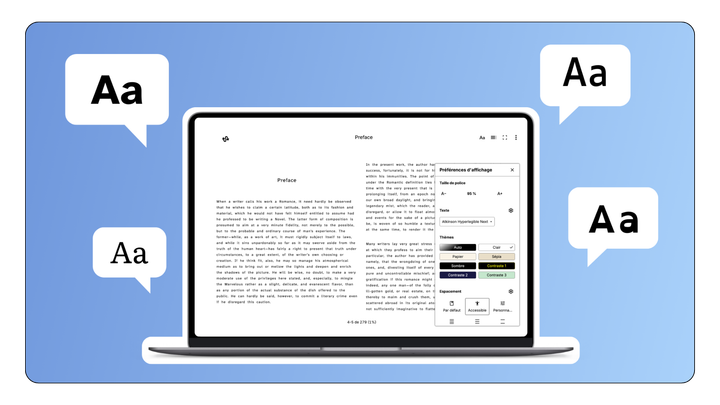
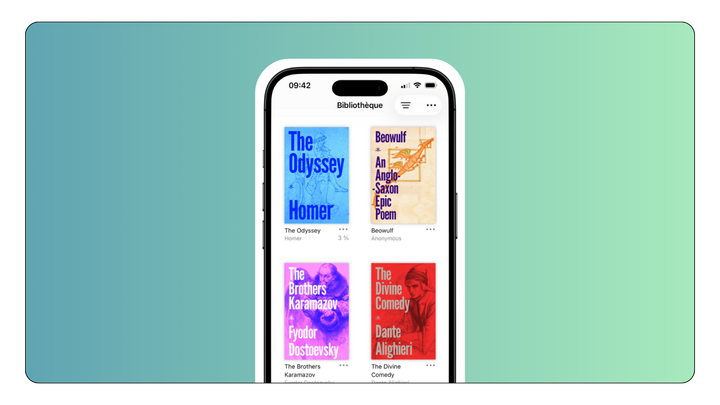
Last month, we sat down with Jonathan Greenberg, Digital Scholarly Publishing Specialist at the NYU Libraries, to discuss their ongoing publication of a series of open-access ebooks on a brand new Web reader, powered by Thorium Web.
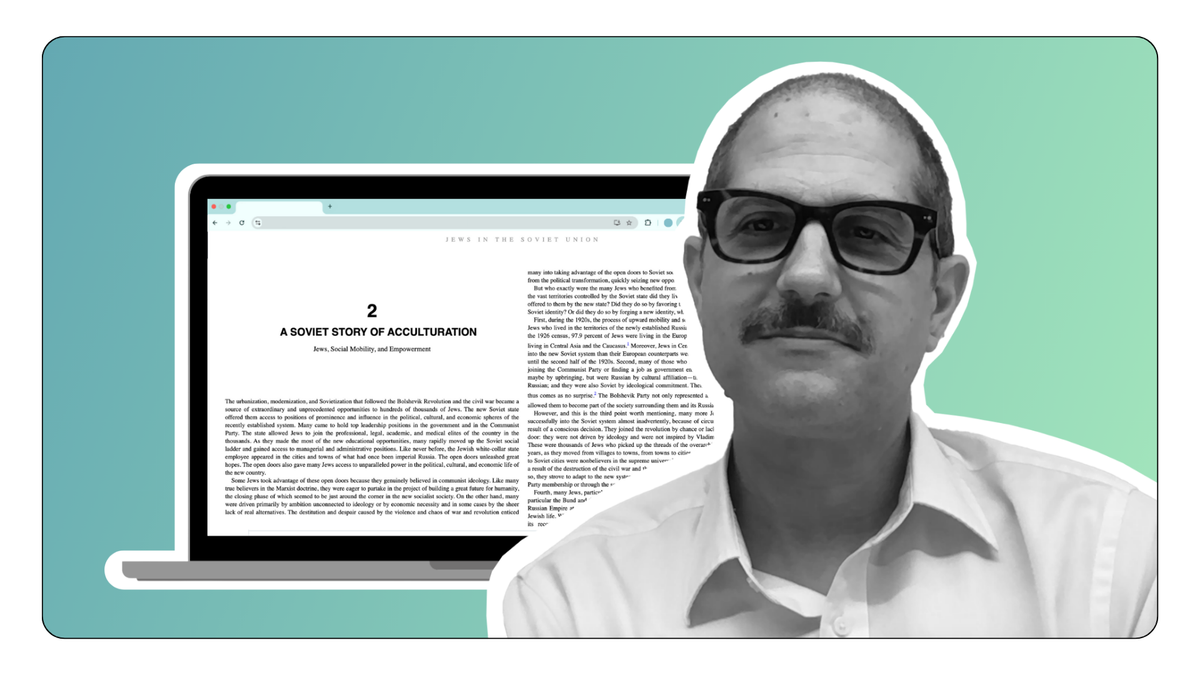
For the NYU Libraries, and for the academic world, this project goes beyond the launch of a new reading platform. It is one more step towards building a state-of-the-art accessible and interconnected reading experience for users, as well as a reinforcement of their commitment to open-access publishing. In this interview, we dived deep in the importance of accessibility, open-source and standards for the unique world of academic libraries.
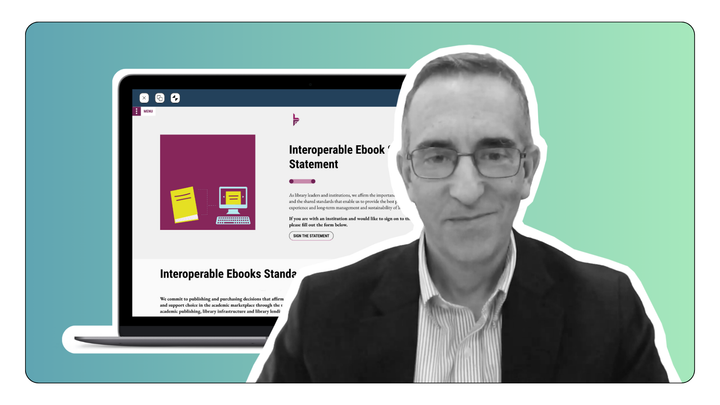
Solène: Hi everyone and welcome to Powered by Readium, our series of publications in which we discuss projects that have been built thanks to Readium technologies! Today, I am with Jonathan Greenberg. We're going to talk about NYU Libraries and their efforts to make scholarly publications available to everyone and to preserve knowledge. Maybe as a starting point, Jonathan, you could tell us a little bit about yourself, about what your position entails at NYU Libraries, and maybe a little bit about the project that we're here to talk about.
Jonathan: Of course! My background is in scholarly publishing, specifically in creating innovative platforms and publications that are Web-based. My position at NYU is such that I sit in two different departments. I am both in the Digital Library Technology Services department here in the Library, as well as in NYU Press. So I understand things from both a librarian's perspective and from a publishers' perspective, which I find very useful, sort of as a bridge between the two organizations.
The project that we're working on is based on a multivolume History of Jews in the Soviet Union. These are books, but there will also be an open-access Web-based publication. We wanted to create a place where people can read, search, and interact with these books. A place that is as accessible as possible, not only in the sense of digital accessibility as we normally think of, but also in terms of access. Three of these books have already been published and the others will be fully published in early 2027.
S: What would you say were the needs that you identified that led to the choice of Thorium Web at the start of this project?
J: Well, we have been using Readium technologies since 2016. We have used the old ReadiumJs in the Open Square platform, our platform for NYU Press's open-access books. That technology is aging and we see - as I know the Redium Foundation does see - the need for an updated Web-based reader. Specifically, the things that we really identified and that we wanted to build on were related to the ways in which users can interact with these books. We mentioned accessibility - the new plans and the existing affordances for digital accessibility that the Readium Web Reader has is a major attraction for us.
We also really want users to be able to interact in terms of annotation and citation. These are really important features for academic users, and we know that some of these features are in the works. We also really wanted to support the project so that the project could develop the kind of tools that we need in our environment, and I trust that they will be. I know that Readium has plans for these. In general, NYU Libraries have a real commitment to open-source software, so that was part of our decision. We also have an interest in being able to adapt or contribute to software to accommodate the kinds of features that our users really need - and I think the kind of features that users across academic institutions really need.
S: You're definitely on point saying that NYU Libraries and the Readium Foundation are aligned in their quest for updated technologies and accessibility. It's also interesting that you mentioned the importance of open-source in academic settings, I will definitely have another question about that later.
For now, because we're in the topic of academia, I'd be interested to know what your vision for this Web Reader and this new approach to open access publications is. What do you think is going to be its impact and what is your ambition in that regard for students and researchers?
J: Well, I'm not going to predict what the longer term impact is, but I can give you my vision and my hopes. I really would like a reader that allows libraries, universities and other organizations to have control over the software that they use. That gets into the open- source question and very importantly right now, in the information that they are providing to their users. I really hope that as a library and as publishers, we can have confidence that we understand this technology. This technology is not controlled by large corporations that need to take our data. I can't really stress that enough.
We've been talking a lot about things like accessibility and open-source software and why we were so interested in using this Reader and those are all general reasons that go beyond the project that we're working on, but I wanted to speak a little bit about this specific project. This is a platform that for the moment is for one specific project at one publisher. Part of the idea is that we would like these books to be used not only as books individually - you know, readers can read them front to back, can consult them as a reference if they'd like - but also as a whole set as a whole volume.
So along with Bluefire, we’ve built a crossbook search feature so that users can search through the entire six volumes or will be able to search through the six volumes at once, using them really as one big resource. That was something that we weren't going to invest the time to build into the outdated Readium reader. But we wanted to use this project to contribute to that kind of feature that will be really useful for this particular project, and hopefully for other projects in the future.
S: In a way, not just publishing a series of books or launching a new Web reader to make life easier. Building new tools to empower students, to spread knowledge and to preserve knowledge, which I know is a big thing with Open Square, and I think your general approach to this subject.
J: Yeah, and I'll just add to that, especially because this is open access, these resources are not only for students, for scholars, or even for academic researchers. They're for anyone who has an interest in this topic. I think that's something that we really do think about. When we make these books open-access, they become accessible to anyone, anywhere in the world who has an internet connection, a browser, and who would like to dig a little bit deeper into the kinds of topics that NYU Press publishes in.
S: This is a very important notion, to distinguish that there are several kinds of accessibility. It's not only about digital accessibility the way that we usually understand it. Making knowledge accessible is also to not always hide it behind a paywall. Now accessibility is a very important topic for the Readium Foundation. It's especially - on our side of the Atlantic, in the EU where I'm based - a super important keyword in 2025. An important European law [the European Accessibility Act, ed.] just became effective a few days ago, expecting tech and software companies to conform to a certain set of rules. What role does accessibility play in your vision for the platform - and what is the extent of its importance in academia? How do Thorium and Readium toolkits help you make a reality for the NYU Libraries?
J: Digital accessibility is incredibly important both for NYU Libraries and for NYU Press. First, the European Accessibility Act has a real impact even on US publishers who hope to sell their books and distribute their books in the EU. As such, NYU Press has been working to meet the demands of EAA. More broadly, accessibility has become a real goal and a value for the University.
The NYU Libraries have made accessibility a real pillar and are striving to meet the needs of its users. We really think about accessibility in everything that we do. That goes for software, that goes for how we design our spaces, physical spaces in the library. So it is absolutely essential anytime that we adopt a new software, anytime that we create a new product, that we are making sure that it is as accessible as possible. I know that the Press is working very hard to make not only the platforms that it uses accessible but also the books themselves, which often need various remediation in order to be fully accessible.
But whether or not we have the kind of mandates that the EU Accessibility Act presents, this is something that has become a real priority for us both in the library space and in the publishing space. We're hopeful that this project will be a success and will be adopted widely because of those values. When I talk to others in the Libraries and in the Press about Readium, this is one of the aspects of it they'll be excited about. You know, this is an accessible-first reader and all of the technology behind it has accessibility in mind. That's something that people are excited about and that the institution really has prioritized.
S: Our mission as a foundation is advocating for more accessible, smoother, easier, interoperable reading solutions, whether it be on Web or on mobile. The very core of our approach, of our toolkits and of our expertise is open-source technologies and, as you mentioned earlier, to detach from proprietary solutions to embrace standards.
You've mentioned that this is also something important to go towards open-source, universal solutions in order to unify the experience from academic institutions to others and beyond. In your own words, what role would you say that open-source and standards should play in academic publishing and libraries, but also in the preservation of knowledge in general?
J: Libraries, in many ways, are all about standardization. All about cataloging books in standard ways so that they can be found and so that when they're found, users understand what they're getting. We've also seen that standards allow books and other resources and websites in general to be accessible. They allow conformance to particular standards or guidelines so that developers and creators who may not have expertise in accessibility per se can still use those standards, those guidelines to make them accessible.
The same goes for preservation. I have worked for a number of years on a project that is looking at how we can make complex forms of digital scholarship easier to preserve. One of the recommendations that we've made over and over again is to use standard standards based file formats, standards-based platforms, standards-based technologies in general. When a preservation organization or a library takes control over a particular publication and needs to preserve it in a way or needs to republish it years down the road, if it wasn't built according to standards, many aspects of it are going to be much much harder to reactivate or republish or to make work in terms of Web technology. So standards are very very important both in terms of accessibility and preservability.
Although I will say, we do have to be careful of not demanding conformance for every type of book and and uh publication. We see a lot of very interesting ways in which scholars and publishers have been innovating in the publishing world and in scholarly communication more generally, and sometimes that innovation requires breaking down barriers, breaking norms, even breaking with existing standards, and we don't want to discourage that kind of experimentation. This is why I keep mentioning not only standards but recommendations, best practices. So I think we need to think sort of as a broader publishing industry, to both develop standards and encourage publishers for whom it makes sense to use those standards as widely as possible, but also build tools and structures that can accommodate things that might break from those standards when necessary.
S: Actually, it's an interesting transition to my next question, which has more to do with the future. After the launch of the final books, which I believe you said was aiming at early 2027, how do you want to see that platform and those efforts grow? What will be your next priorities and wishes regarding their development?
J: We would really like to use this reader technology not only in the History of Jews in the Soviet Union project, but also more broadly in NYU Press's Open Square platform. We don't currently have a timeline for that, but that would be the immediate next step on our end. More broadly, I would like the reader to be used in library settings and in other publishing settings. I would really hope that other publishers and other platforms are interested in adopting this technology and perhaps contributing to it.
I do realize that in order for Readium Web to be successfully used in libraries, there will need to be accommodation for Digital Rights Management [DRM, ed.]. I know that those working on Thorium Web and Readium toolkits are very much aware of that. As much as we might want to prioritize open-access publishing and open-access scholarship in the NYU Libraries and at NYU Press, we do realize that in our current world, a fully functional reading system needs to be able to accommodate DRM as well. We want our users and other library users to have a full choice of the books that they are able to access, whether those books have DRM or not.
S: Before we end this interview, I have one more question for you. Well, it isn’t really a question. Is there anything about the project that we haven't mentioned that you think our readers will be interested to know?
J: Yes. I think I'd like to just say something about browser-based, Web-based reading and publishing. In the NYU Libraries, we have had an interest in this topic for the past decade, longer than the past decade. We led a project that ended in 2018 called Enhanced Network Monographs. It was an attempt to create a platform where books, that all happened to be open-access books, all lived side by side on one big platform. They were indexed in a way that enabled connections between those books for the purposes of search, for the purposes of seeing synergies where you might not have seen them, and for the purpose of helping users discover the knowledge that they needed.
We were also really interested in things like Web-based annotation, ways in which you can use Web-based books and share annotations with other users. A Web-based book has a particular URL, unlike an EPUB file that you load onto your device. Users, whether they're in a class or in a reading group, whether an instructor is using it in a specific way or it's simply for your own use, can annotate a book that's on the Web and share that annotation and have discussions about that book via the Internet.
All of those things are still things that we're interested in. The idea that books on the Web can be worked on is something that is really special to the Web. That is one of the reasons why I'm so excited about Readium Web for our world. Not every corner of publishing thinks about working monographs or books in the way that we might in libraries or in the NYU Libraries in particular. I think it will be very exciting for scholars and for instructors and for students, if and when we can spread and develop the technology in a way that users can really embrace it.
S: Absolutely. For myself, I’m pretty confident that we will and I really look forward to seeing it start with the launch of the last three books of the series. I'm really excited to see it happen. Thank you so very much for joining me today and sharing your insight with us, Jonathan . This has been an absolute pleasure, a great conversation. I really hope that our readers will appreciate it as much as I did, and I hope that you had a great time as well.
J: Well, thank you very much, Solène. It was a pleasure to meet with you.
Visit NYU Press' Open Square platform to discover the first three books in the History of Jews in the Soviet Union series: